Skip to the five fingers
DOMESTICSTREAMERSA rotating set of Holy Hand symbols
ASCII EXPERIENCE

THE HOLY HAND

AN INTERACTIVE GUIDEASCII EXPERIENCE

SCROLL ↓
The five fingers of the Holy Hand

WHY THE HAND EXISTS

Five fingers.
One framework.

Most data dies in a spreadsheet or as a slide. We believe data isn't finished when it's understood. It's finished when someone does something. The Holy Hand is the method we built at Domestic Data Streamers to make that happen on purpose. Five fingers, one grip, and a kitchen logic underneath: forage the data, cook it, plate it, share the meal. If it's good, the calories turn into movement. No finger is impressive alone. The grip is the point.

A five-finger field test

The Hand at Home

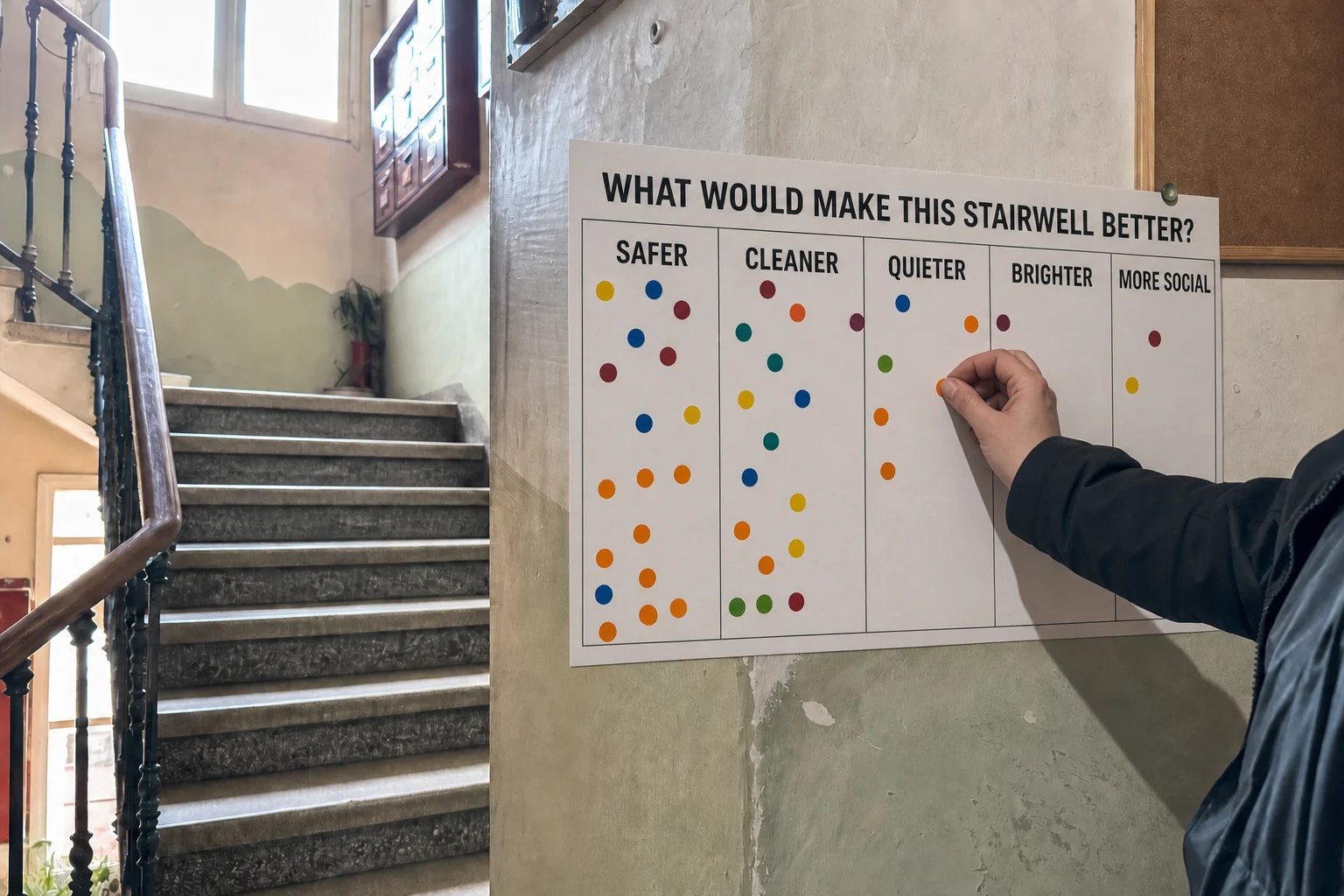
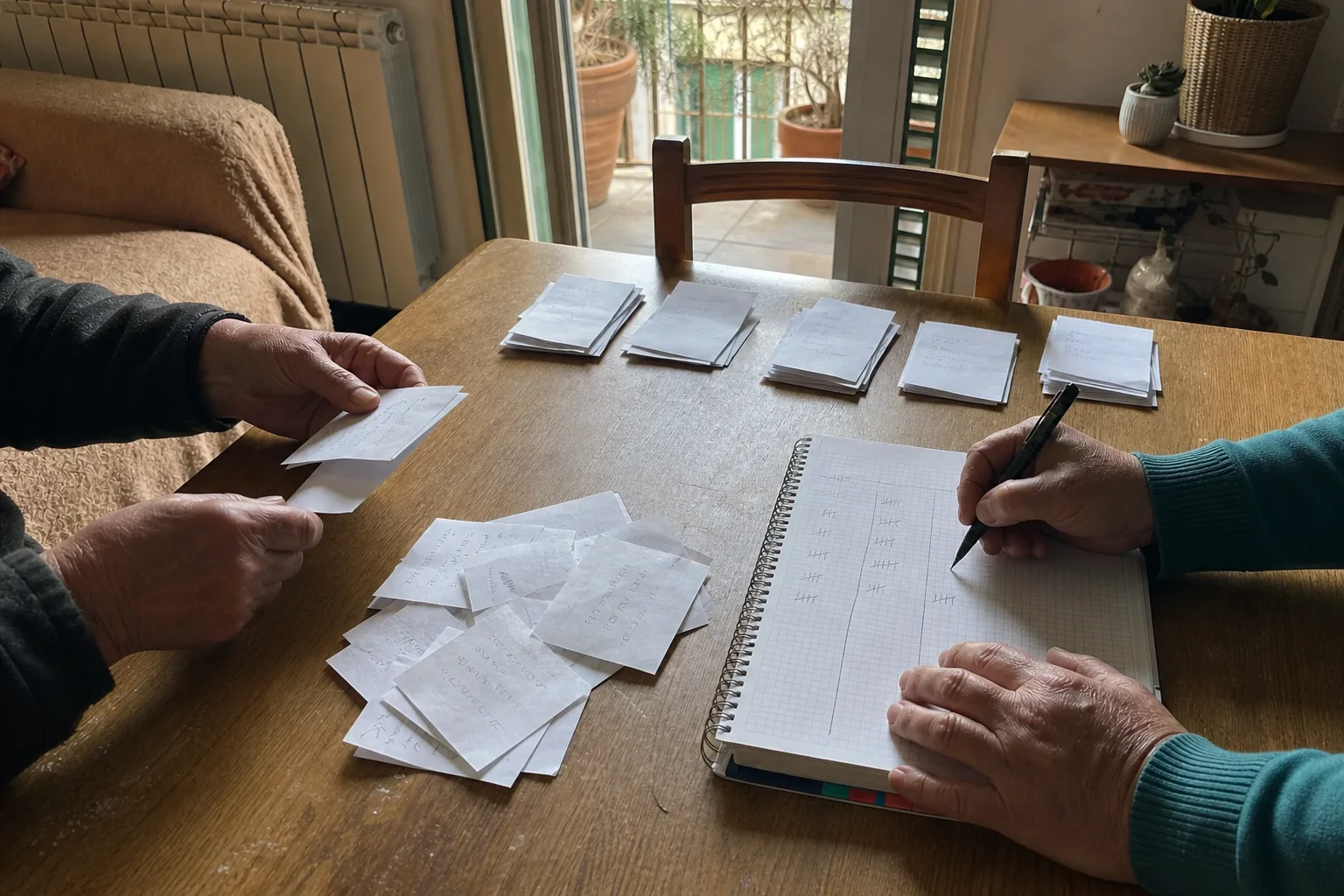
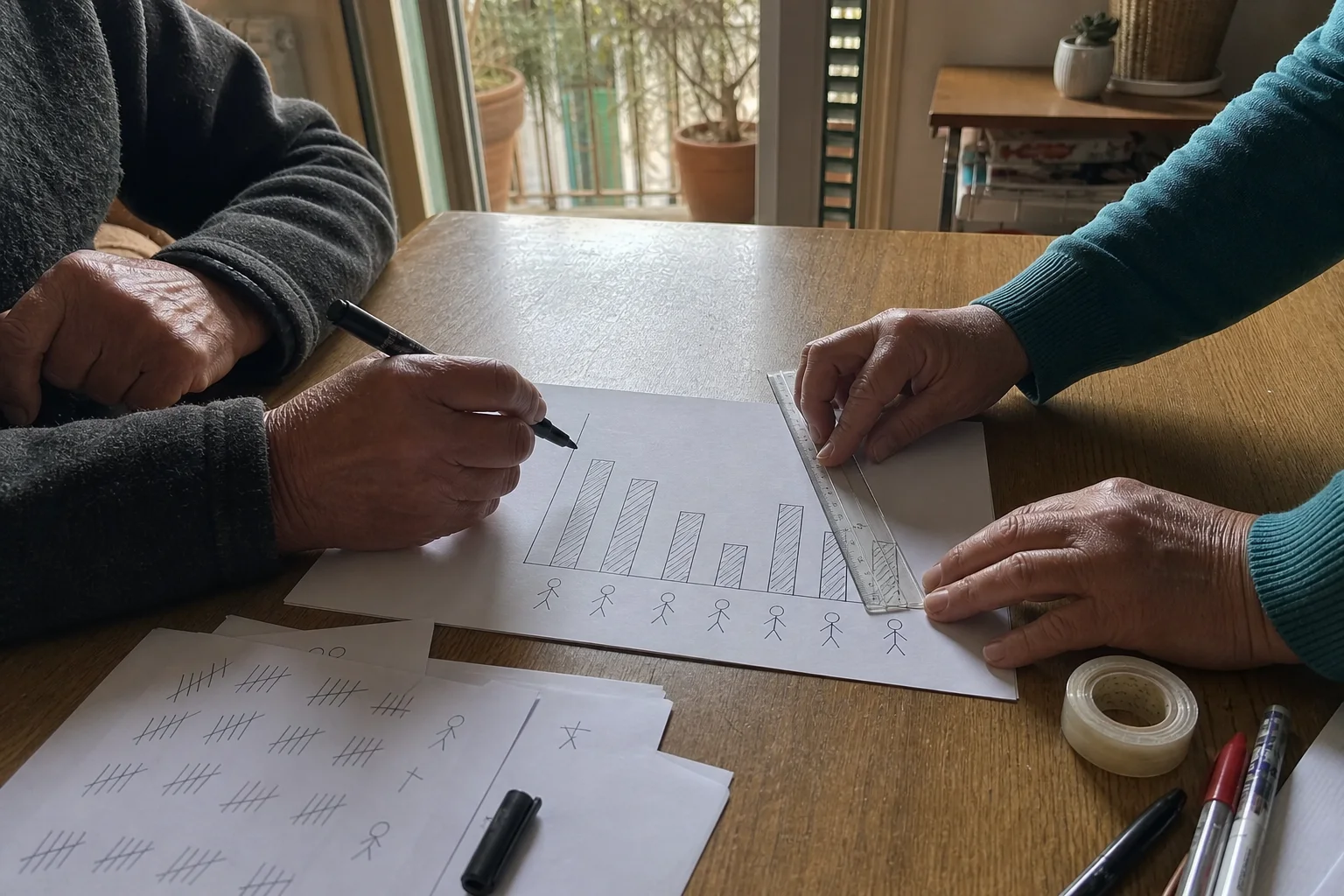
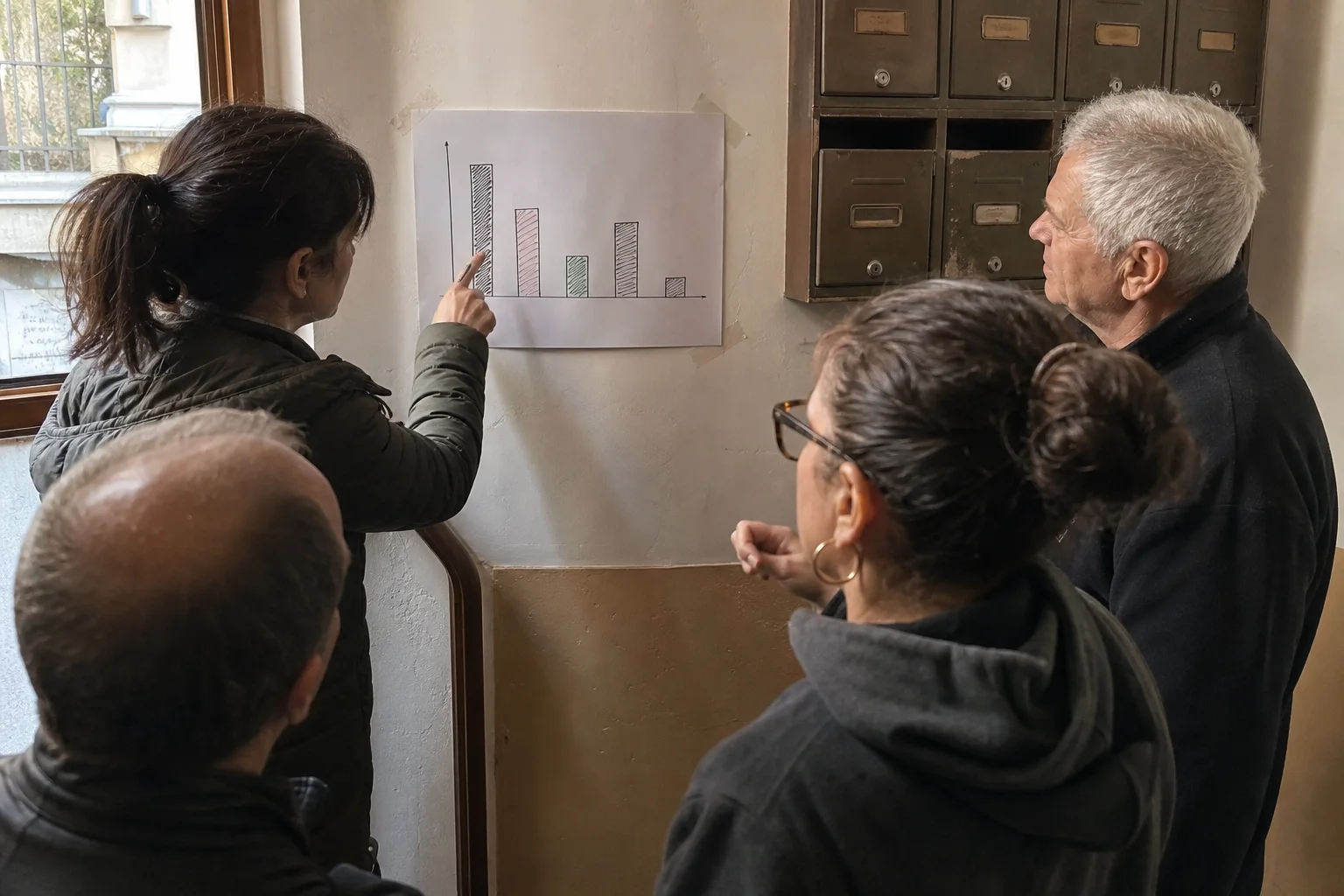
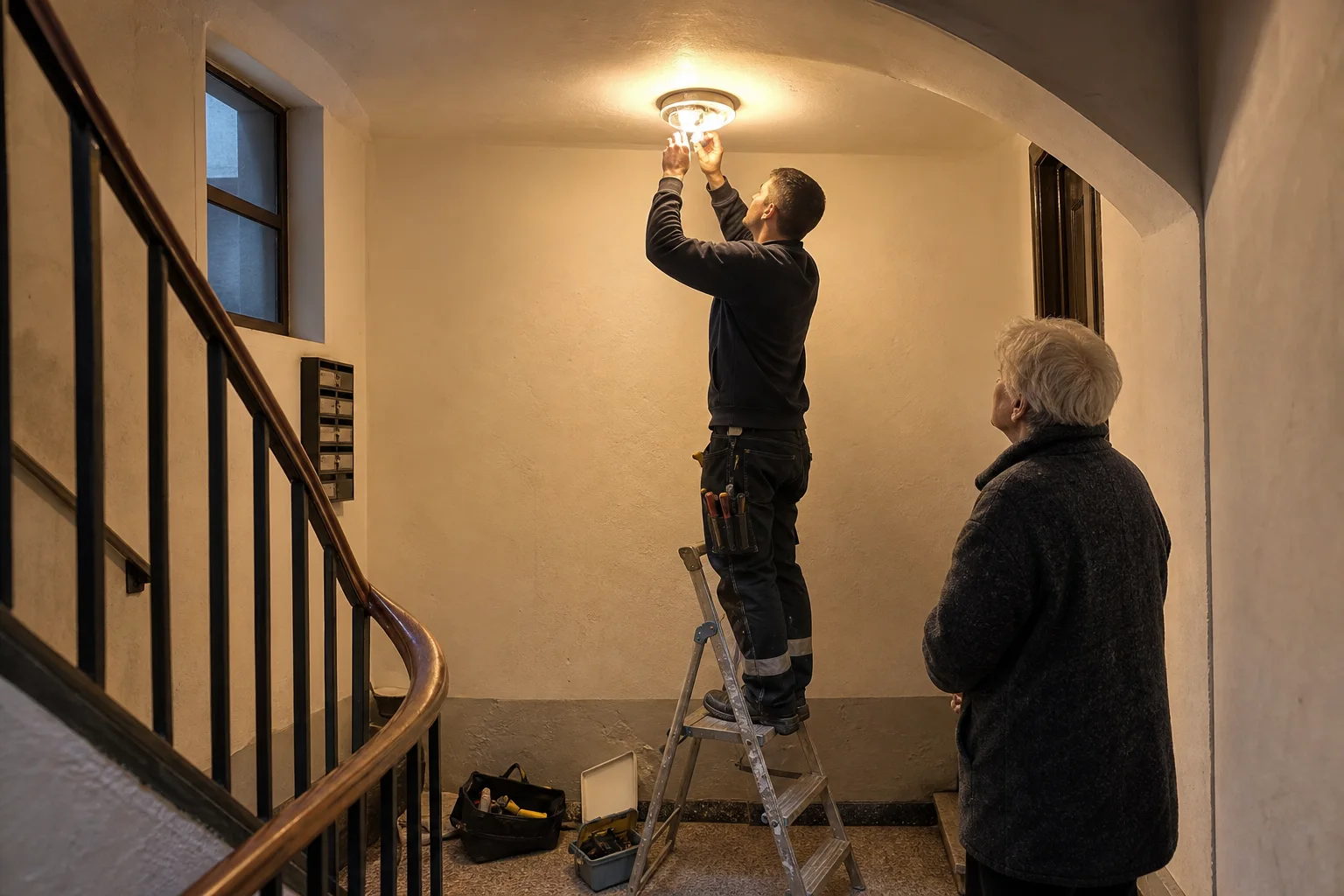
Here is the five-finger method at work with your neighbours: low budget, low resolution and useful enough to change something.

  1. 01 / Forage

    Write one concrete, anonymous question and leave it beside the letterboxes for a week.

  2. 02 / Cook

    Group repeated answers, count them and keep the unexpected ones visible. Do not rewrite anyone's voice.

  3. 03 / Plate

    Turn the count into a hand-drawn chart: the common answer large, one surprising voice beside it.

  4. 04 / Share

    Return the chart to the stairwell. Let neighbours add context, disagree and decide what matters.

  5. 05 / Act

    Give the clearest need a date, an owner and a repair. Then mark what changed.

FINGER 01 (The thumb)

Data Foraging

Collect the food

Every meal starts before the kitchen. You walk out, see what's growing, and bring the right basket. We do the same with data. Ready-made datasets miss things: the voices and traces that never got recorded. So we invent our own collection tools. Interviews that don't feel like interviews. Installations that listen. How you gather information decides what you can ever know.

Two hands foraging mushrooms directly from a forest floor
Finger 01 / Forage: choose and gather the ingredients.
Live engine

Finger 01Data Foragingin motion

Build the tool that sees what the old ones miss.

FoodWalk out and gather the food.

DataBuild the tool that sees what the old ones miss.

Finger 01: Data Foraging. Forage. Search the field before deciding what deserves to be gathered.Food metaphor: Walk the terrain. Notice what is actually growing. Data equivalent: Look past the ready-made dataset for the missing voices.

Finger 01 / field ethics

Foraging has rules

You are gathering from people, not from a forest floor. So the basket comes with rules. Consent before capture, and consent that can be withdrawn later. Anonymity by default when a story could hurt the person who told it. We delete what we no longer need, and the people we forage from can say no at any point, including after they said yes. Some data we refuse to collect at all. A tool that could exist is not always a tool that should. War & Love sits in uncomfortable territory here. Matching with soldiers through a dating app reached voices nothing else could, and it stretched the consent rule to do it. We show it because the tension is real, not because it is resolved.[5] say no[4] refuse

Finger 01 / in practice

2 DDS projects

These examples show what it does in real work.
PROJECT IMAGE: The Feeling of PatientsPROJECT IMAGE: The Feeling of Patients
Finger 01 / Example 01VIEW PROJECT ↗

Finger 01 / Example 01 · Domestic Data Streamers / La Panera Art Center

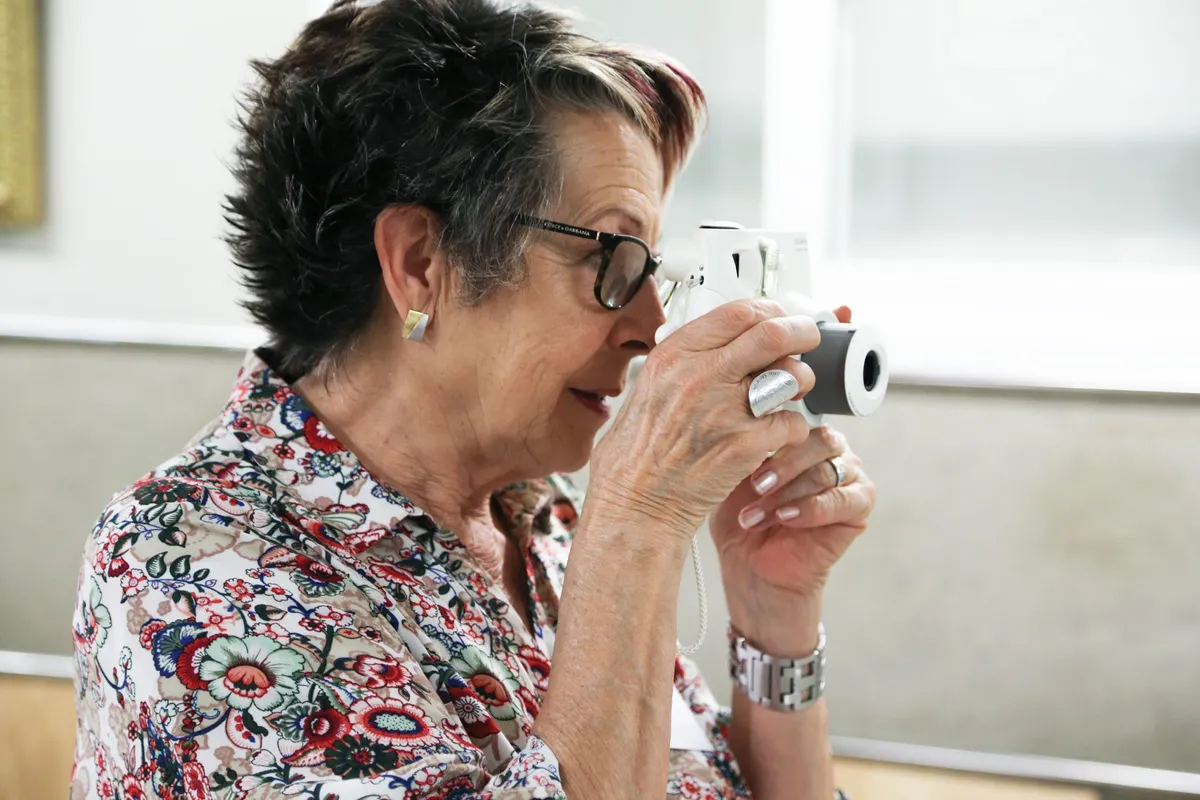
The Feeling of Patients

Mapping how a hospital feels, so patients know they are not alone.

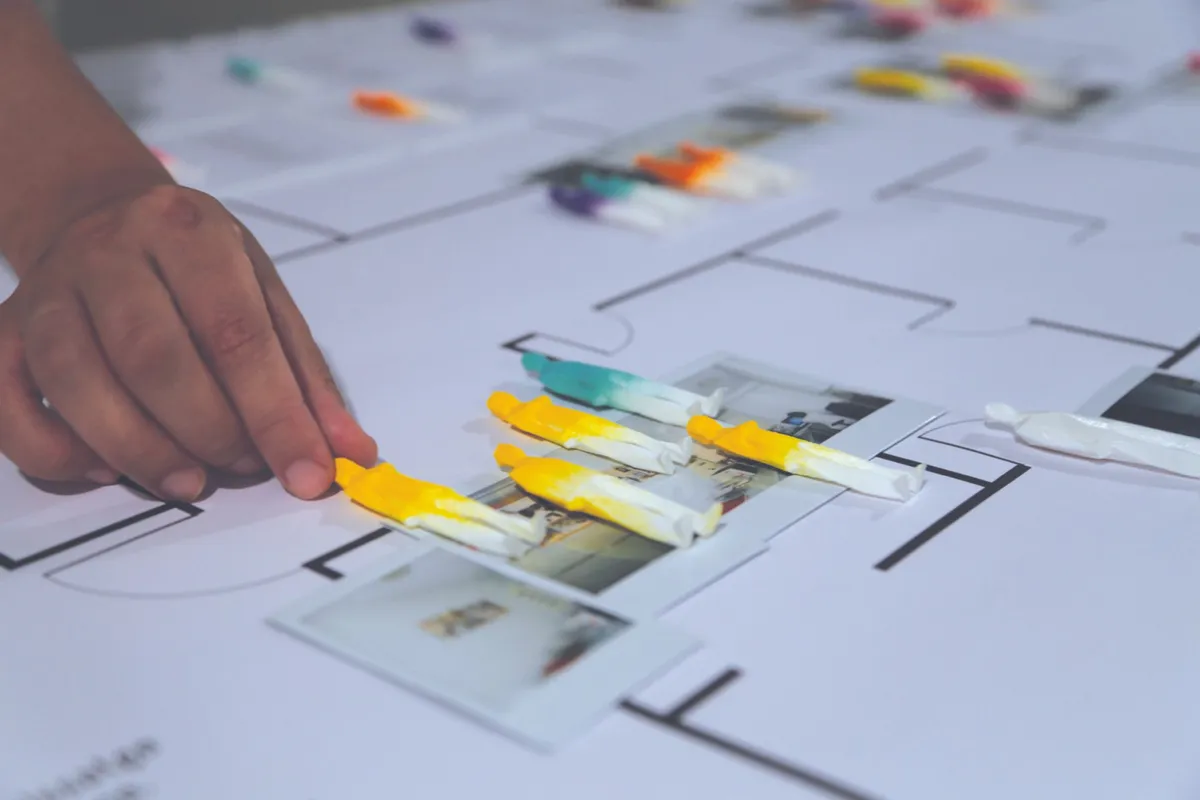
During an art stay with La Panera Art Center, we worked with cancer patients and their companions in the oncology ward of Arnau de Vilanova Hospital in Lleida. Some were undergoing treatment. Others had come out the other side. We soon discovered that interviews did not represent the full range of their problems and perceptions, so we began using Polaroid cameras to help them illustrate the hospital spaces that made them feel fear, love or loneliness: the reception desk, the waiting room, the radiotherapy unit and everything in between. The photographs brought new reflections to hospital staff and changed how they saw their everyday place of work.

  • Art-stay fieldwork
  • Emotional mapping
  • Participatory photography
Original case study ↗
PROJECT IMAGE: War & Love
Finger 01 / Example 02PROJECT IMAGE

Finger 01 / Example 02 · Jordi Farreras / MADD student project, 2022

War & Love

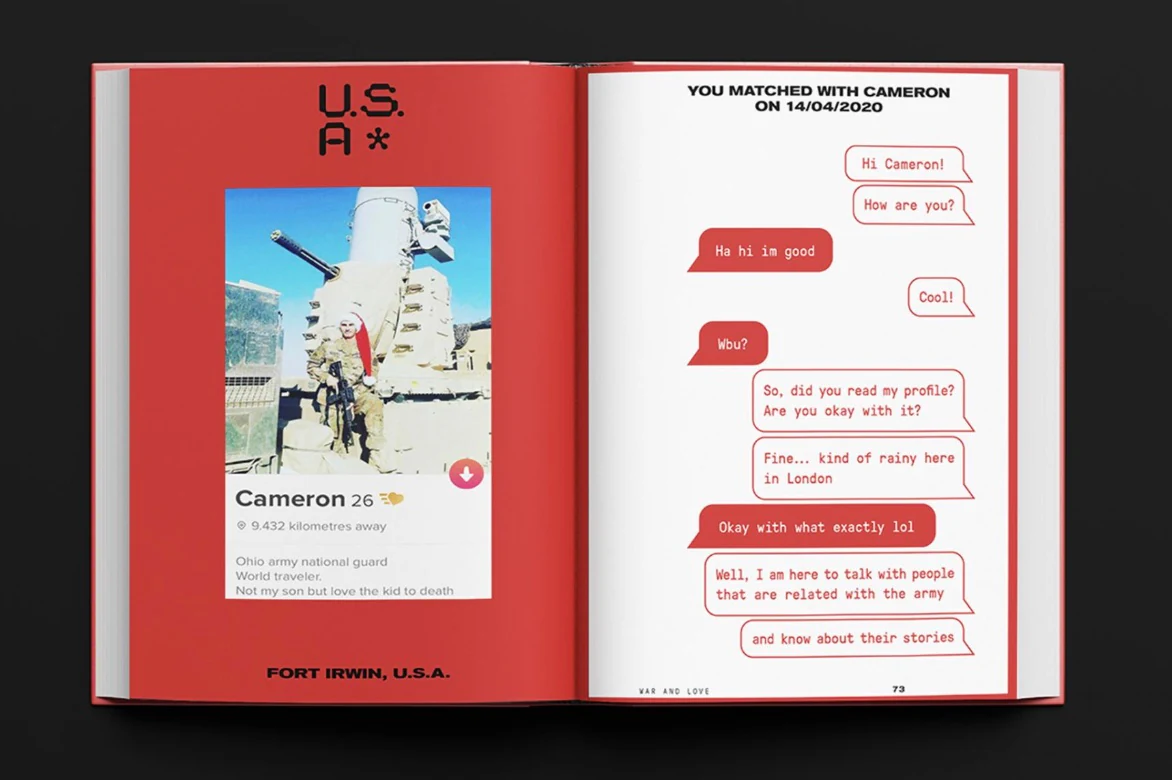
Tinder as a fieldwork tool: matching with soldiers in war zones to ask them about love.

For his 2022 MADD student project, Jordi Farreras bought Tinder Premium, set his location near deployed war zones and matched with soldiers. A dating app became a research instrument, reaching people no survey would ever find. All soldiers were asked for consent before the interviews began.

  • Platform repurposing
  • Geolocated outreach
  • Conversational fieldwork

FINGER 02 (The index finger)

Data to Insight

Cook it

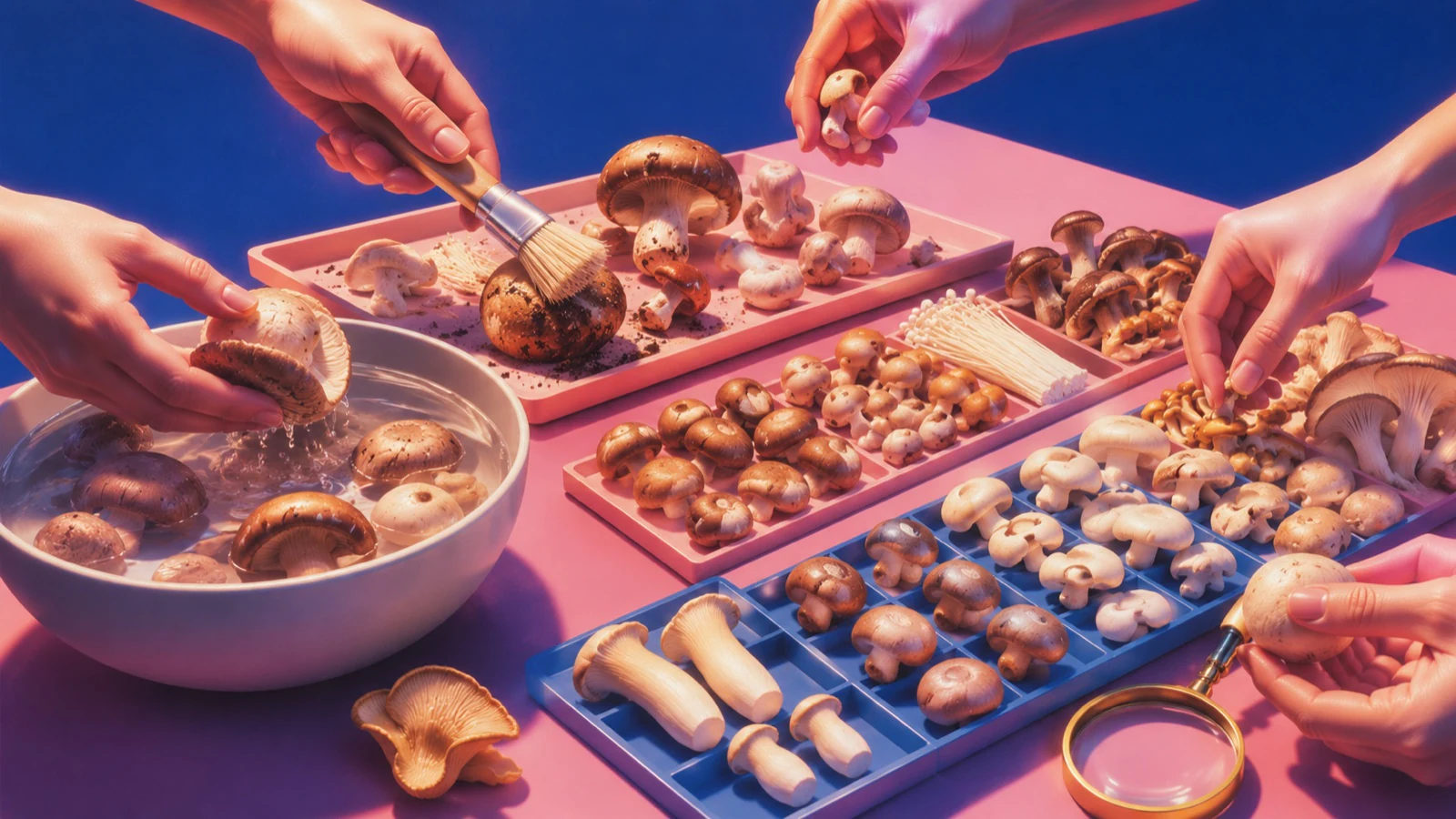
Ingredients are not dinner. They get washed, cut, seasoned and cooked until their relationships turn into flavour. We cook raw numbers and testimony the same way. Compare, contextualise, edit, cut. The goal is to shrink the distance between evidence and a human mind until a pattern appears, without losing the truth around it.

Many hands sorting, washing and inspecting mushrooms before cooking
Finger 02 / Cook: transform separate ingredients into a dish.
Live engine

Finger 02Data to Insightin motion

Turn raw material into a pattern a person can use.

FoodCook the ingredients until they become a dish.

DataTurn raw material into a pattern a person can use.

Finger 02: Data to Insight. Raw ingredients. Unsorted fragments are present, but they are not insight yet.Food metaphor: Lay out the ingredients and learn what each one can become. Data equivalent: Inspect the raw numbers, testimonies and absences before framing them.

Finger 02 / in practice

2 DDS projects

These examples show what it does in real work.
PROJECT IMAGE: The Child Marriage Data Portal
Finger 02 / Example 01VIEW PROJECT ↗

Finger 02 / Example 01 · UNICEF

The Child Marriage Data Portal

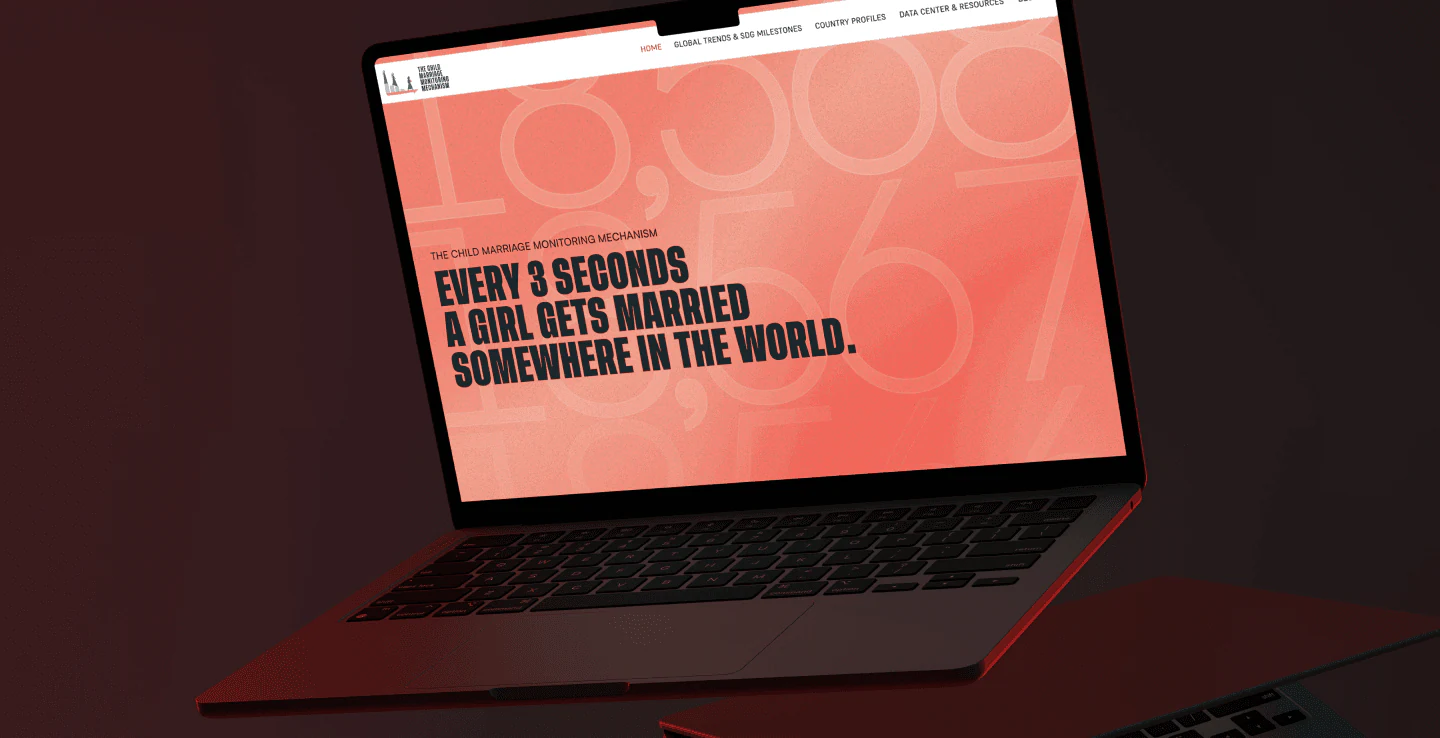
Global evidence on child marriage, rebuilt around the questions people actually need to answer.

The data existed. Census figures, surveys, trend lines. Almost nobody could use them. We restructured everything around decision-relevant questions, built comparison into the interface, and connected the prevalence figures to what they touch: school, health, income and power.

  • Decision-led information architecture
  • Comparative visualisation
  • Human-scale editorial framing
Original case study ↗
PROJECT IMAGE: UNICEF Financial Transparency Portal
Finger 02 / Example 02VIEW PROJECT ↗

Finger 02 / Example 02 · UNICEF

UNICEF Financial Transparency Portal

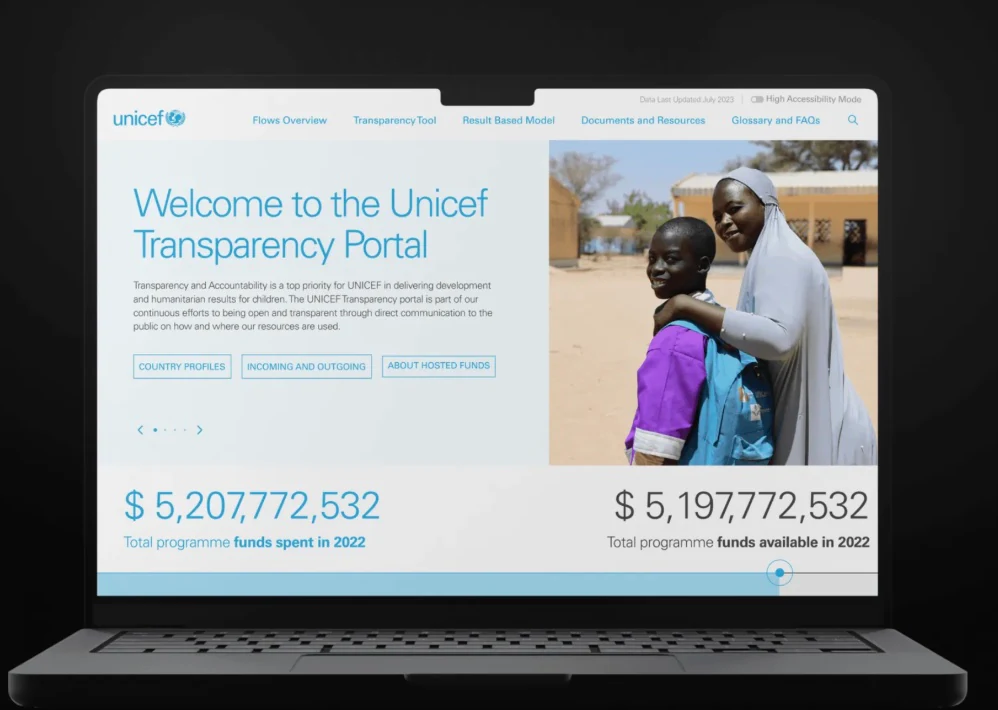
Billions in global spending, made legible at every depth.

The challenge was political as much as visual: how does a global organisation show where the money goes? A finance officer, a donor government, a journalist and a curious taxpayer each need a different depth of answer from the same numbers. We built the layers so each one finds theirs.

  • Layered disclosure
  • Audience-specific views
  • Institutional transparency
Original case study ↗

FINGER 03 (The middle finger)

Spark Curiosity

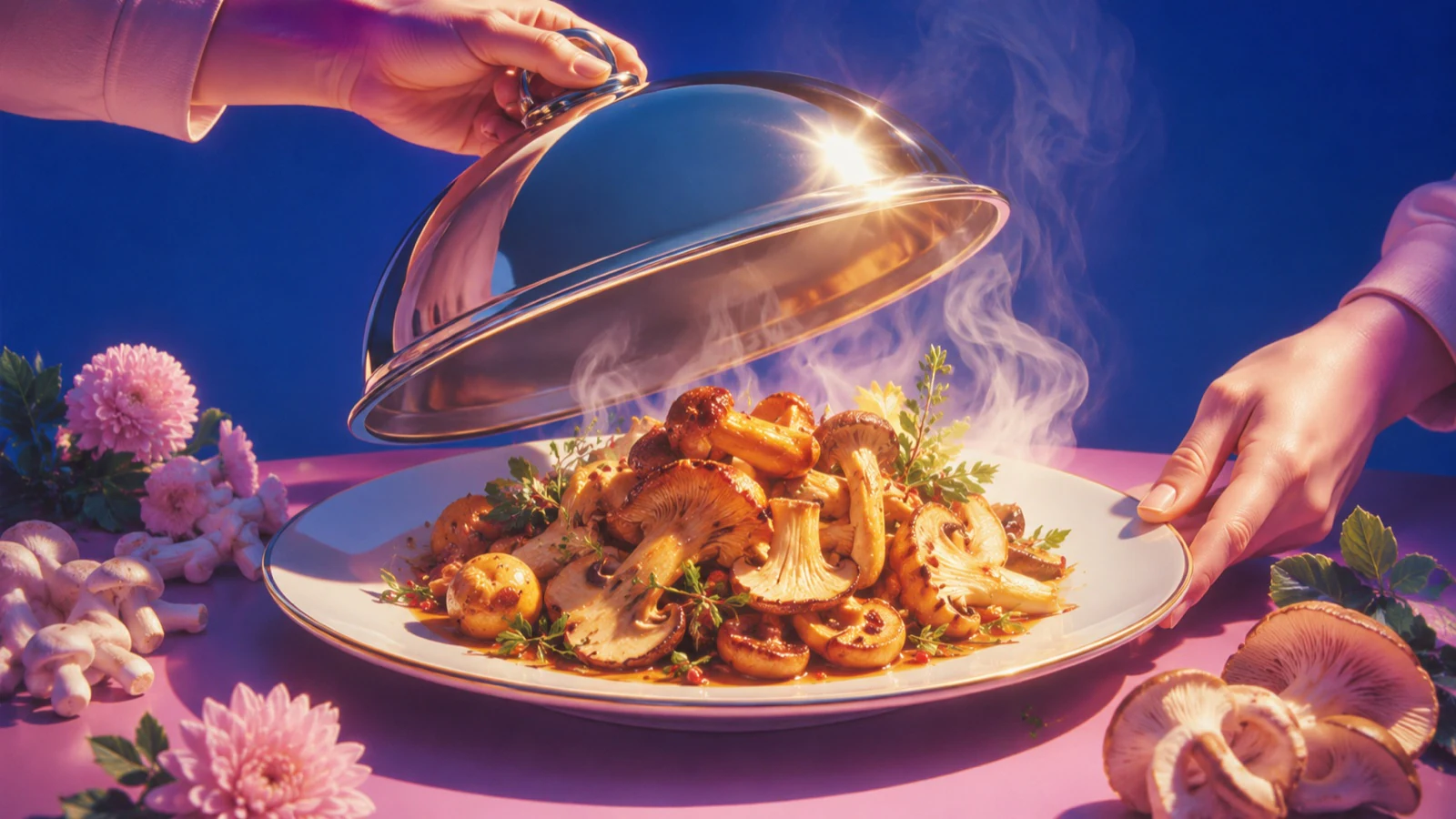
Serve it on a compelling plate

A good meal has to be wanted. The dish gets plated, the table gets set, and the smell pulls people in before anyone explains anything. Information deserves the same invitation. We use art, scale, surprise and the right medium to make facts earn attention. Not decoration. An entrance.

A steaming mushroom dish revealed beneath a polished serving dome
Finger 03 / Plate: make the food inviting enough to approach.
Live engine

Finger 03Spark Curiosityin motion

Give information a form that earns attention.

FoodPlate the dish so people genuinely want to taste it.

DataGive information a form that earns attention.

Finger 03: Spark Curiosity. Create the invitation. An unexpected form turns information into a focal object people choose to approach.Food metaphor: Plate with enough care and surprise that the eyes arrive before the fork. Data equivalent: Give the insight a form people approach before they comprehend it.

Finger 03 / in practice

2 DDS projects

These examples show what it does in real work.

PROJECT IMAGE: Death by Numbers: The Rhythm of Violence Behind the Headlines
Finger 03 / Example 01VIEW PROJECT ↗

Finger 03 / Example 01 · Domestic Data Streamers / CCCB


Death by Numbers: The Rhythm of Violence Behind the Headlines

A room of metronomes makes the rhythm of violence against women impossible to ignore.

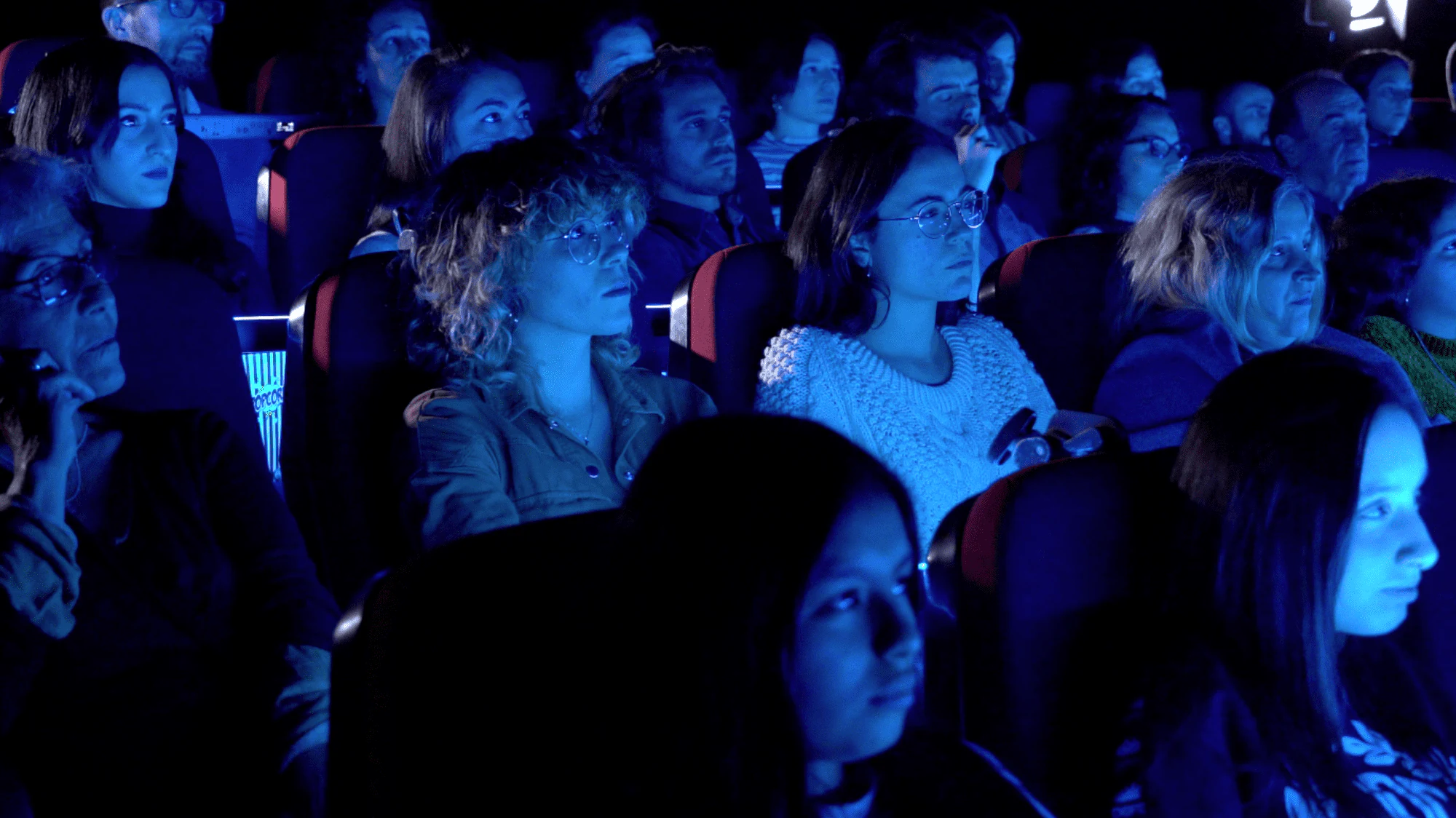
Built for the Sade exhibition at CCCB in 2023, the installation responds to how the media gives a rare, sensational death more attention than chronic violence. We made that chronicity audible. In a darkened room, each metronome stands for a country, each minute stands for a year, and every tick marks a woman killed by a partner or former partner.

  • Data sonification
  • Kinetic installation
  • Media-bias reframing
Original case study ↗
PROJECT IMAGE: E-Sènior: Things change, but I want to live at my place
Finger 03 / Example 02VIEW PROJECT ↗

Finger 03 / Example 02 · Domestic Data Streamers / l’Hospitalet

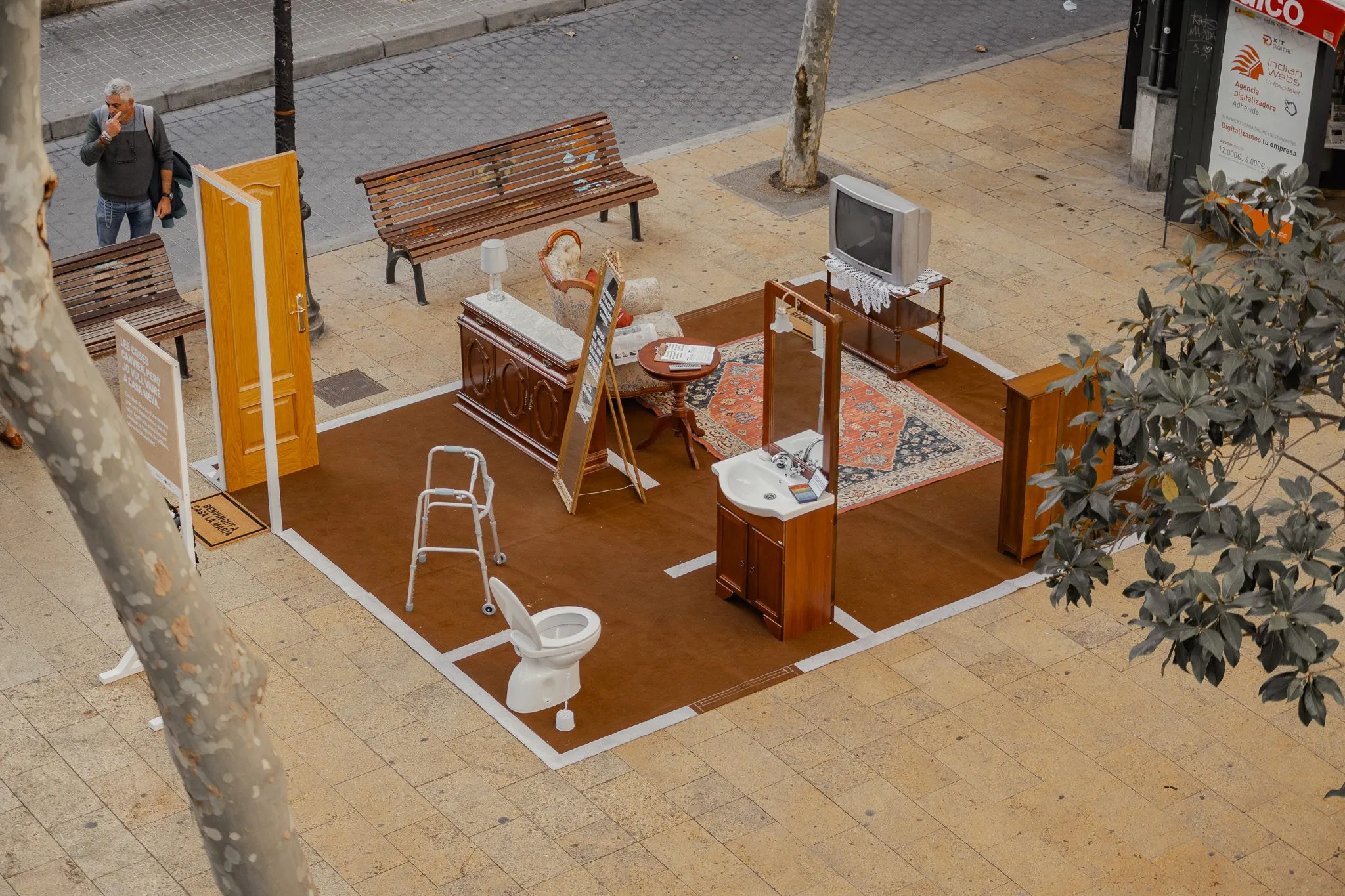
E-Sènior: Things change, but I want to live at my place

A full apartment on a public street makes ageing alone visible, and starts a neighbourhood conversation.

We rebuilt an apartment on a main boulevard in l’Hospitalet and filled it with data about older neighbours who live alone and intend to keep doing so. An audio recording of Maria, the flat’s lone resident, walked visitors through it: her objects, her barriers, her errands and her independence.

  • Street-scale installation
  • Spatial data storytelling
  • Audio-led community dialogue
Original case study ↗

FINGER 04 (The ring finger)

Architecture of Debate

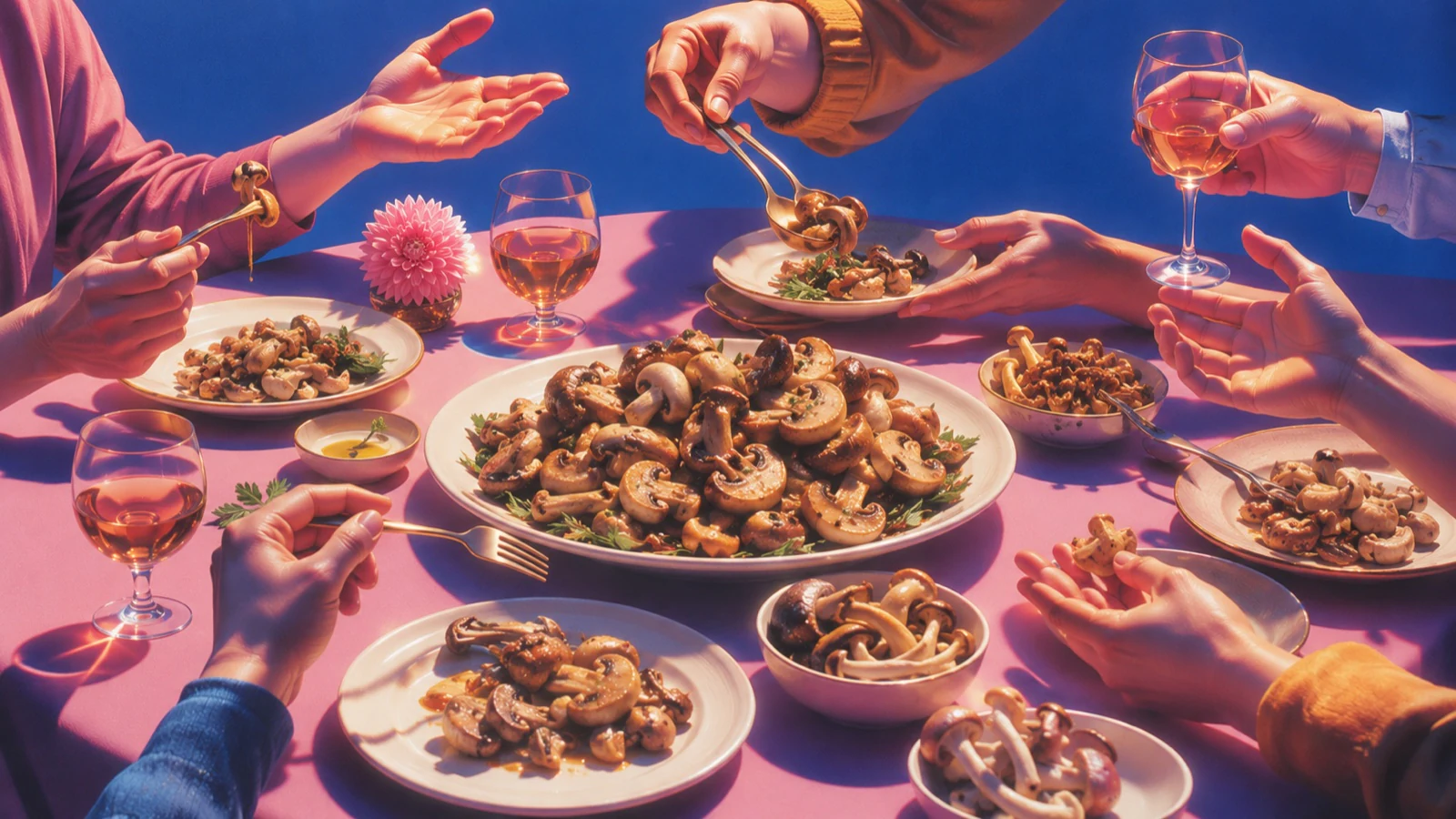
Share the food in community

Food becomes communal when people sit at one table and serve each other. Conversation travels with the dishes. Stories, questions, disagreement, listening: all of it is part of the meal. We build the same conditions around evidence. Different lives and positions meet and become visible. The conversation gets richer. Nobody is forced to agree.

Many people sharing a mushroom meal and conversation around one table
Finger 04 / Share: eat together and make space for conversation.
Live engine

Finger 04Architecture of Debatein motion

Build a space where evidence, experience, doubt and difference can meet.

FoodShare the food while conversation unfolds around the table.

DataBuild a space where evidence, experience, doubt and difference can meet.

Finger 04: Architecture of Debate. Gather at the table. A shared meal creates a space where everyone can take part.Food metaphor: Set enough places, bring the food to the middle and invite everyone in. Data equivalent: Design access, roles and rules so evidence can be encountered together.

Finger 04 / in practice

2 DDS projects

These examples show what it does in real work.

PROJECT IMAGE: FEMINISTA HAVIES DE SER
Finger 04 / Example 01VIEW PROJECT ↗

Finger 04 / Example 01 · Government of Catalonia / Natza Farré

FEMINISTA HAVIES DE SER

Anonymous experiences of sexism, printed in real time, turned testimony into a collective space.

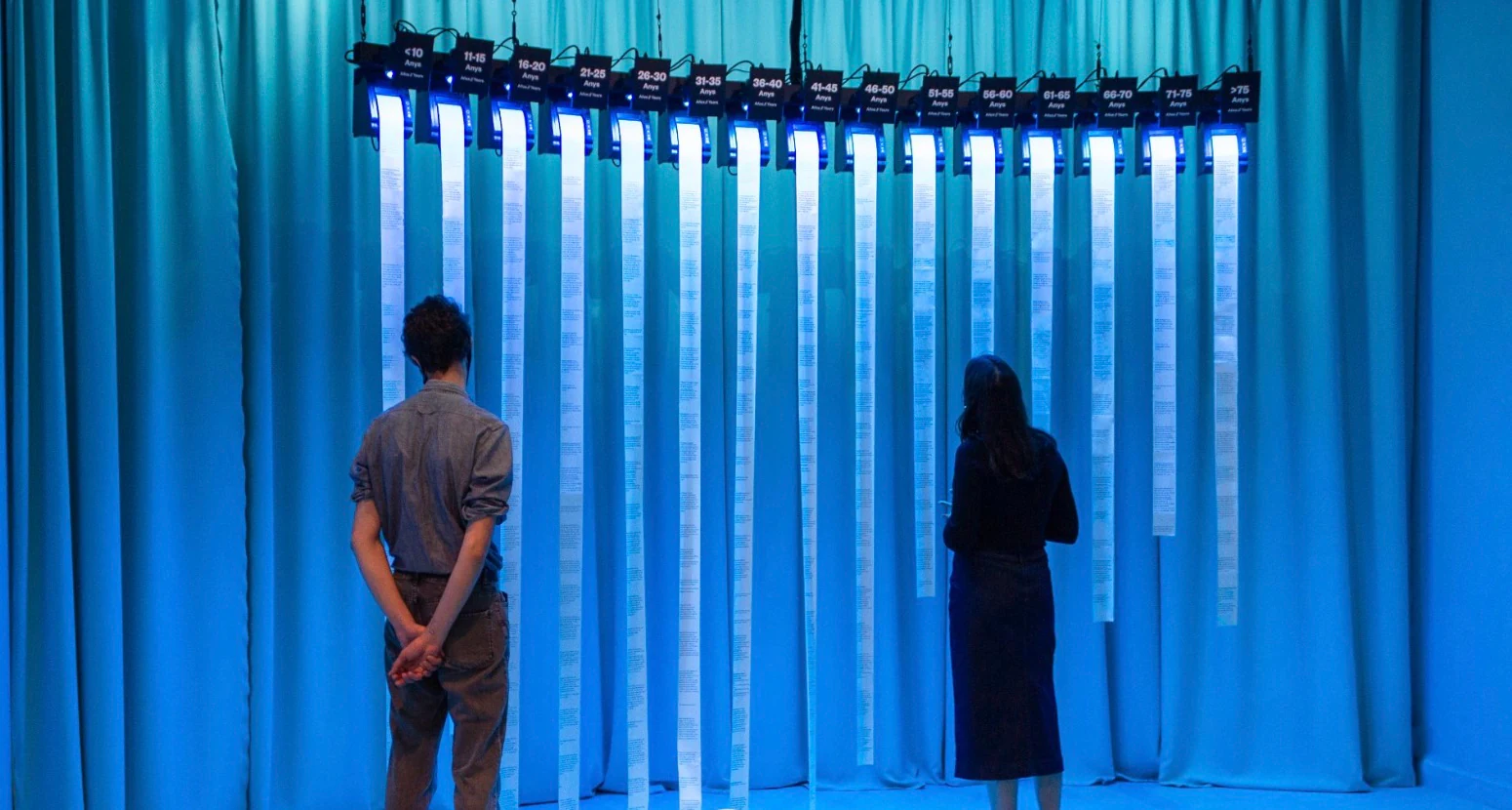
Fifteen suspended mini-printers formed a waterfall of stories, publishing visitors’ experiences of sexism anonymously and instantly. The stream ran uncensored. Anyone in the room could read what others had lived through, and the studio stopped being the only narrator.

  • Anonymous live publishing
  • Collective testimony
  • Contemplative debate space
Original case study ↗
PROJECT IMAGE: The Influencers Power
Finger 04 / Example 02PROJECT IMAGE

Finger 04 / Example 02 · Domestic Data Streamers

The Influencers Power

A church full of candles turned private positions into a public debate.

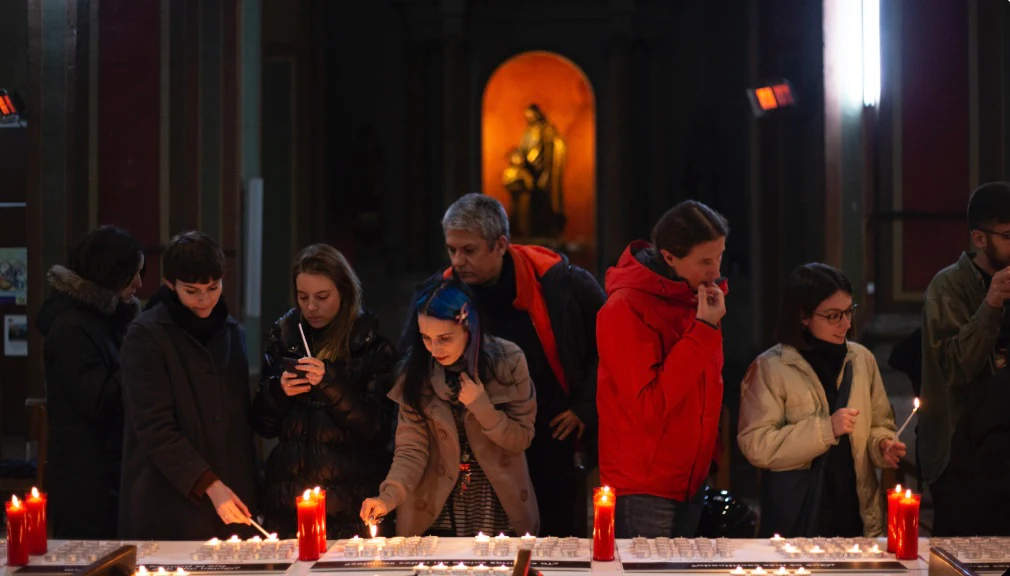
The installation brought an established church community together with Barcelona’s technology and creative scenes to ask who shapes belief and power now: figures from the Bible or figures on Instagram. People answered by lighting and placing a candle. A private position became visible through a shared ritual.

  • Candle-based participation
  • Site-specific debate
  • Collective spatial visualisation

FINGER 05 (The little finger)

From Numbers to Action

Turn calories into a new behaviour

The meal does not end at the table. The body turns calories into something: a run, a push, a build, a repair. We chase the same passage with data. Understanding connects to a choice, the choice to a feedback loop, and something visibly changes: a decision, a habit, a rule, a budget.

A runner eating a banana while moving forward
Finger 05 / Act: turn calories into a new behaviour.
Live engine

Finger 05From Numbers to Actionin motion

Turn understanding into something someone visibly does.

FoodTurn calories into a new behaviour.

DataTurn understanding into something someone visibly does.

Finger 05: From Numbers to Action. Become energy. Calories become fuel for a new behaviour; knowledge becomes capacity to act.Food metaphor: Calories become fuel for whatever the body does next. Data equivalent: Connect the insight to a person and a moment to act.

Finger 05 / in practice

2 DDS projects

These examples show what it does in real work.

PROJECT IMAGE: 16 Times at Sant Joan de Déu
Finger 05 / Example 01VIEW PROJECT ↗

Finger 05 / Example 01 · 16 Times / Hospital Sant Joan de Déu

16 Times at Sant Joan de Déu

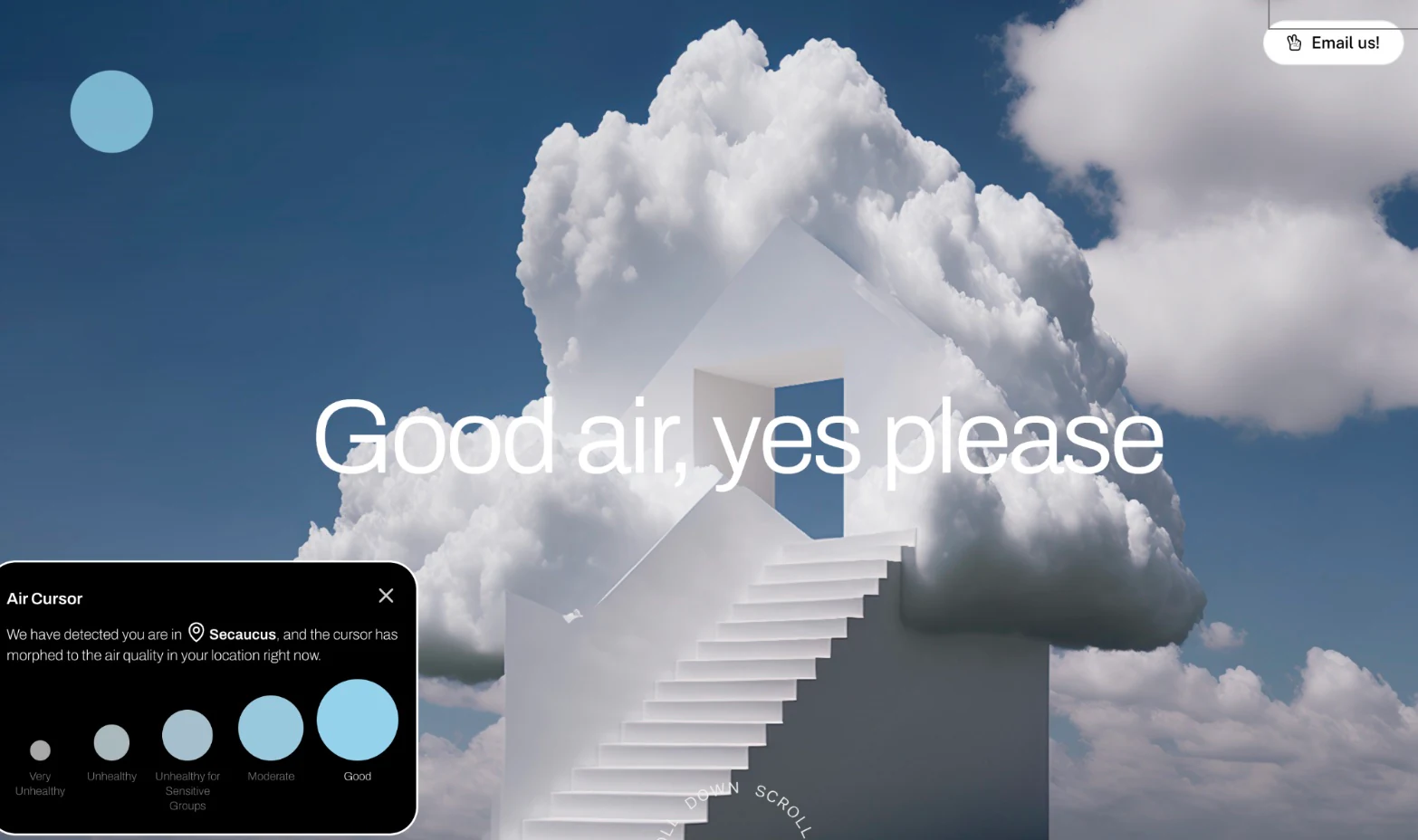
Air sensors traced an invisible pollutant in a children’s hospital to one cleaning product. It was gone within days.

At Hospital Sant Joan de Déu, 16 Times sensors kept finding a persistent airborne chemical in a pediatric oncology room. The investigation led to a bleach product that had recently been swapped in. The reading found the source. The source got removed. That is this finger, working.

  • Continuous air sensing
  • Source investigation
  • Rapid product removal
Original case study ↗
PROJECT IMAGE: The Privilege of Choice
Finger 05 / Example 02VIEW PROJECT ↗

Finger 05 / Example 02 · Oxfam Intermón

The Privilege of Choice

An inequality report became a personal experience with measurable outcomes.

Users face the same choices with different consequences depending on where they were born. The figures never change. The feeling does. Distant inequality becomes something that happened to you, three minutes ago, on your own screen.

  • Interactive choice
  • Personalised inequality framing
  • Action measurement
Original case study ↗

Scientific foundations & references

Learning / agency

Knowledge is constructed through experience

The hand grows from learning by doing and from the belief that experienced agency can travel outward.

[1]↗[2]↗

Information / situated knowledge

The way data is gathered changes what it can say

Information value, search cost, social position and ownership all shape the first finger.

[3]↗[4]↗[5]↗

Cognition / statistics

Understanding depends on structure and framing

Good representation protects limited attention and gives context to a number.

[6]↗[7]↗[8]↗[9]↗

Curiosity / aesthetics / embodiment

A productive gap can pull people toward knowledge

Curiosity grows when an experience balances clarity, uncertainty and bodily participation.

[10]↗[11]↗[12]↗[13]↗

Democracy / co-creation

The shape of a forum changes the quality of participation

Access, equality, productive conflict and explicit choices are design variables.

[14]↗[15]↗[16]↗[17]↗

Behavior / capability / power

Information becomes action when people can see and use their agency

Choice environments, social norms, perceived control and visible systems all affect what happens next.

[18]↗[19]↗[20]↗[21]↗[22]↗[23]↗

  1. [1] Piaget, Jean. The Construction of Reality in the Child. Basic Books, 1954.
  2. [2] Bandura, Albert. “Self-Efficacy: Toward a Unifying Theory of Behavioral Change.” Psychological Review 84, no. 2 (1977): 191–215.
  3. [3] Pirolli, Peter, and Stuart Card. “Information Foraging.” Psychological Review 106, no. 4 (1999): 643–675.
  4. [4] Haraway, Donna. “Situated Knowledges: The Science Question in Feminism and the Privilege of Partial Perspective.” Feminist Studies 14, no. 3 (1988): 575–599.
  5. [5] Kukutai, Tahu, and John Taylor, eds. Indigenous Data Sovereignty: Toward an Agenda. ANU Press, 2016.
  6. [6] Sweller, John. “Cognitive Load Theory, Learning Difficulty, and Instructional Design.” Learning and Instruction 4, no. 4 (1994): 295–312.
  7. [7] Goodwin, Charles. “Professional Vision.” American Anthropologist 96, no. 3 (1994): 606–633.
  8. [8] Spiegelhalter, David. The Art of Statistics: Learning from Data. Pelican Books, 2019.
  9. [9] Sigman, Mariano. The Secret Life of the Mind: How Your Brain Thinks, Feels, and Decides. Little, Brown, 2017.
  10. [10] Loewenstein, George. “The Psychology of Curiosity: A Review and Reinterpretation.” Psychological Bulletin 116, no. 1 (1994): 75–98.
  11. [11] Berlyne, D. E. Aesthetics and Psychobiology. Appleton-Century-Crofts, 1971.
  12. [12] Alibali, Martha W., and Mitchell J. Nathan. “Embodiment in Mathematics Teaching and Learning.” Journal of the Learning Sciences 21, no. 2 (2012): 247–286.
  13. [13] Dewey, John. Art as Experience. Minton, Balch & Company, 1934.
  14. [14] Habermas, Jürgen. The Structural Transformation of the Public Sphere. MIT Press, 1991.
  15. [15] Mouffe, Chantal. “Deliberative Democracy or Agonistic Pluralism?” Social Research 66, no. 3 (1999): 745–758.
  16. [16] Sanders, Elizabeth B.-N., and Pieter Jan Stappers. “Co-creation and the New Landscapes of Design.” CoDesign 4, no. 1 (2008): 5–18.
  17. [17] Kahneman, Daniel, Olivier Sibony, and Cass R. Sunstein. Noise: A Flaw in Human Judgment. Little, Brown Spark, 2021.
  18. [18] Thaler, Richard H., and Cass R. Sunstein. Nudge: Improving Decisions About Health, Wealth, and Happiness. Yale University Press, 2008.
  19. [19] Ajzen, Icek. “The Theory of Planned Behavior.” Organizational Behavior and Human Decision Processes 50, no. 2 (1991): 179–211.
  20. [20] Bandura, Albert. “Self-Efficacy: Toward a Unifying Theory of Behavioral Change.” Psychological Review 84, no. 2 (1977): 191–215.
  21. [21] Kahneman, Daniel. Thinking, Fast and Slow. Farrar, Straus and Giroux, 2011.
  22. [22] Latour, Bruno. Pandora’s Hope: Essays on the Reality of Science Studies. Harvard University Press, 1999.
  23. [23] Sen, Amartya. Development as Freedom. Knopf, 1999.
READ YOUR HAND

The Holy Hand © 2026 by Domestic Data Streamers is licensed under CC BY 4.0